
Series 3: Episode Nine
Emile Ducke
The multi-award winning German documentary photographer, most often found in the far edges of Russia and Eastern Europe, shares the challenges of making work that matters, for the New York Times, New Yorker, ZEIT and more. For visual storytellers, this is a masterclass in how to make people look, and look again.
Released 20.02.26
The Conversation
The German-born documentary photographer Emile Ducke talks to Sophy from his temporary home in Tbilisi, Georgia, on the eve of his next assignment to the Arctic. Combining humility and conviction, he takes us on a rare journey in this podcast, from his early love of photography instilled by his father, who shot on large format cameras, to his first significant break, when he travelled to Tomsk in Siberia in 2016. This proved the beginning of a relationship with a region that still holds him close: Russia, Eastern Europe and its lesser-visited peripheries.
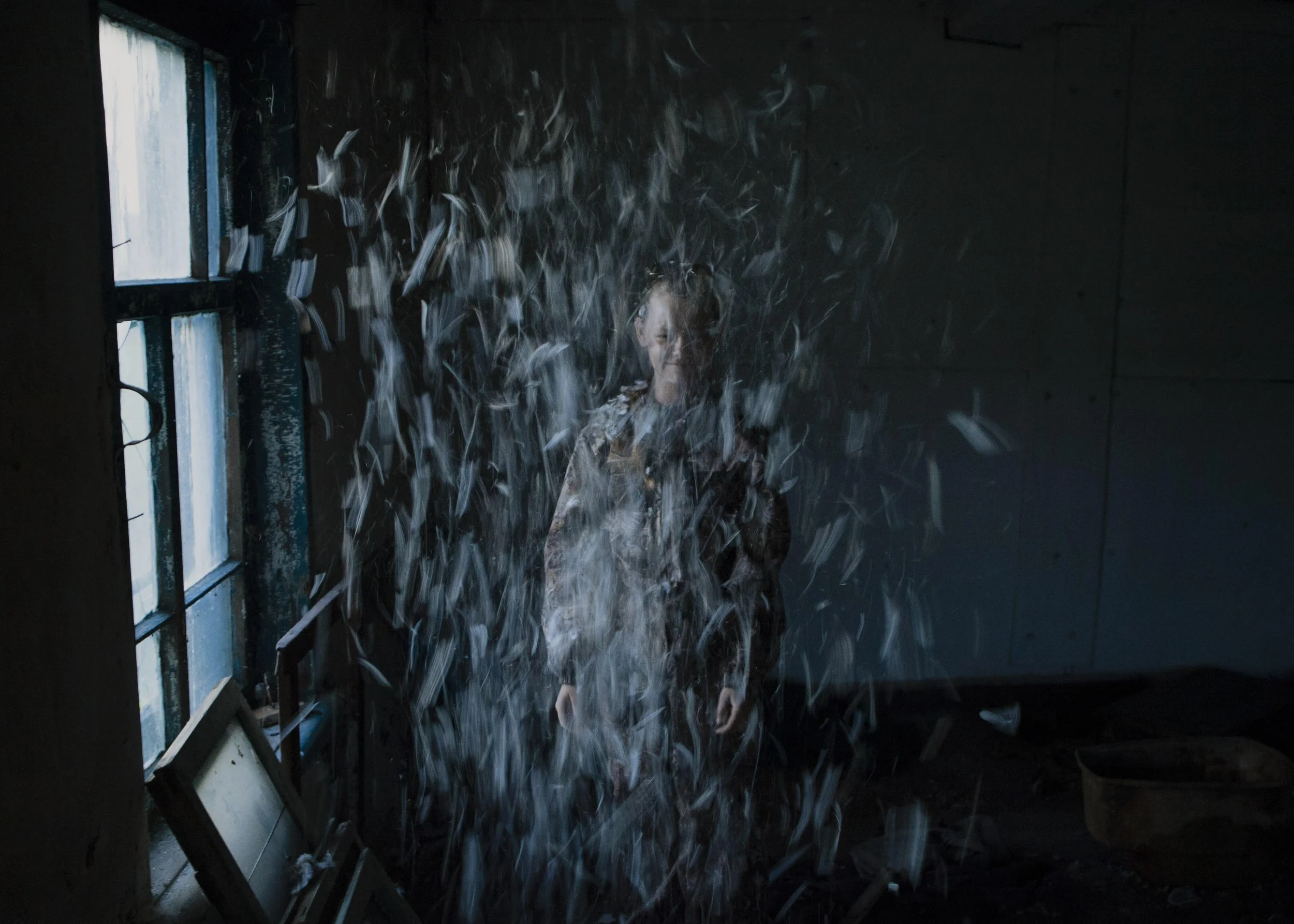
“It all came together when I started a journey along a river called the Ket,” says Emile. This led him to a place with a long history of exile, where he accessed a closed community of Old Believers — a religious sect that rarely lets outsiders in. On that journey, Emile takes the image of a burst pillow in an abandoned house which headlines this episode.
He discusses how nostalgia is a driving force in Putin’s Russia — “it’s interesting to work with nostalgia, but also break it, to find a small note that disrupts that idea.” Emile talks about his working practices in the field, how he prefers to drink tea with a subject before taking their photograph, the importance of narrative, slowness, listening. And the aesthetic influence of early Russian colour photography.
From Western Siberia, Emile ventures to the Russian Far East and the Gulags of Kolyma. Sophy and Emile discuss the influence of Varlam Shalamov — a Gulag survivor, and author of Kolyma Tales, and Shalamov’s haunting description of “the terror of indifference — how the cold that can freeze a man’s spit can also freeze a man’s soul.” He unpicks the nuances of working with human suffering, including his assignments in conflict zones, most recently in Ukraine. Emile is drawn to the stories that sit far behind the frontlines, each story an attempt to find new ways into the reality of war, to fight that terror of indifference.
“Rather than making a statement, I hope that my photographs can make someone stop and wonder and ask themselves questions rather than making a big, moral, loud statement.”
To get the most out of this conversation, see Emile website’s, www.emileducke.com to view his work.
Image: Emile Ducke
Books discussed:
Varlam Shalamov
— Kolyma Tales
Books can be purchased from:
